

Title 31 casino compliance can get complicated fast for tribal gaming finance teams.
On paper, the job sounds straightforward: track cash activity, keep the right records, support CTRC and MTL reporting, document suspicious activity review, and be ready if FinCEN asks questions.
In daily finance work, it is rarely that clean.
A tribal casino finance director may be dealing with cage activity, slots, table games, deposits, vault movement, food and beverage revenue, hotel activity, vendor payments, payroll, tribal government reporting, housing programs, grant funds, and council reporting.
Some activity belongs to the casino enterprise. Some belongs to tribal government. Some may belong to housing or another related entity.
That is where a generic ERP setup starts to fall apart.
For a tribal casino, their software needs to do more than record debits and credits. It needs to show which entity owns the activity, which gaming day it belongs to, which cash area handled it, who reviewed it, what documents support it, and how the record would hold up if an examiner asked for it months later.
That is the idea behind the Title 31 daily reconciliation workflow in Sage Intacct.
First, What Does Title 31 Mean for a Tribal Casino?
Title 31 is the set of federal rules that tells casinos how to track and report certain cash activity. For tribal casinos, that usually includes large cash transactions, multiple related cash transactions, suspicious activity, customer identification, AML procedures, and recordkeeping.
FinCEN is the federal agency that oversees these rules. A FinCEN exam is a compliance review. During the exam, regulators may ask the casino to show how it tracks cash activity, supports required reports, handles exceptions, and keeps records.
A FinCEN exam usually is not something a casino can plan around like an annual audit. It can happen based on risk, prior findings, reporting patterns, operational changes, or regulator focus. The exact timing can vary, which is why the daily record matters so much.
For the finance team, the point is simple: if someone asks about a day’s cash activity, the casino needs to show what happened, who reviewed it, and where the backup lives.
Why Generic Accounting Software Breaks Down for Tribal Casino Title 31 Records

Generic accounting software usually works fine when the organization has one simple operating structure. Tribal casinos rarely fit that model.
A tribal finance team may be managing three legal areas at the same time: tribal government, casino enterprise, and housing or program entities.
Each one needs its own records, approvals, reports, and audit trail. The casino side also has daily cash activity that needs to be tied to Title 31 support.
The government side may need fund, grant, department, and council reporting. The casino side may need gaming day, cage, vault, slots, table games, deposits, cash source, CTRC support, MTL support, and exception review. Housing may need project, unit, restricted-fund, and compliance reporting.
This also affects financial consolidation. When tribal government, casino enterprise, and housing activity all need to roll into leadership or council reporting, the system has to keep each legal area separate without forcing finance to stitch the full picture together manually. If the entity structure is weak, consolidated reporting becomes harder to trust.
Generic software often handles this by pushing too much detail into the chart of accounts or forcing the finance team to manage missing detail in spreadsheets. That may work for basic financial statements, but it creates problems when someone asks for the record behind a specific gaming day.
Where Sage Intacct Fits With Title 31 and the FinCEN Exam
A tribal casino may use one system for cage activity, another for gaming operations, another for AML or compliance review, and another for accounting. Each system has a different job.
Sage Intacct’s job is the finance record.
✓ The cage system handles cage activity.
✓ Gaming systems handle gaming operations.
✓ The AML and compliance process handles patron-level review, suspicious activity investigation, and required reporting.
Sage Intacct is there to help finance show how daily casino activity moved into the books, how it was reviewed, what support exists, and where the record lives.
That matters during a FinCEN exam because regulators may ask the casino to support the story behind cash activity. They may want to see how reports were backed up, how exceptions were handled, whether records were retained, and whether the accounting record lines up with the daily support.
For a tribal casino, that finance record has even another layer of complexity. The accounting system may already be serving the casino enterprise, tribal government, and housing or program entities. The casino’s Title 31 daily record has to fit inside that broader finance environment while keeping those legal areas cleanly separated.
In plain terms, Sage Intacct helps finance answer: Can we explain this gaming day clearly, and can we show the support behind it?
That is the role it plays in Title 31 exam readiness. It connects daily casino activity to the record finance leaders need to defend.
Why the Right Setup Matters
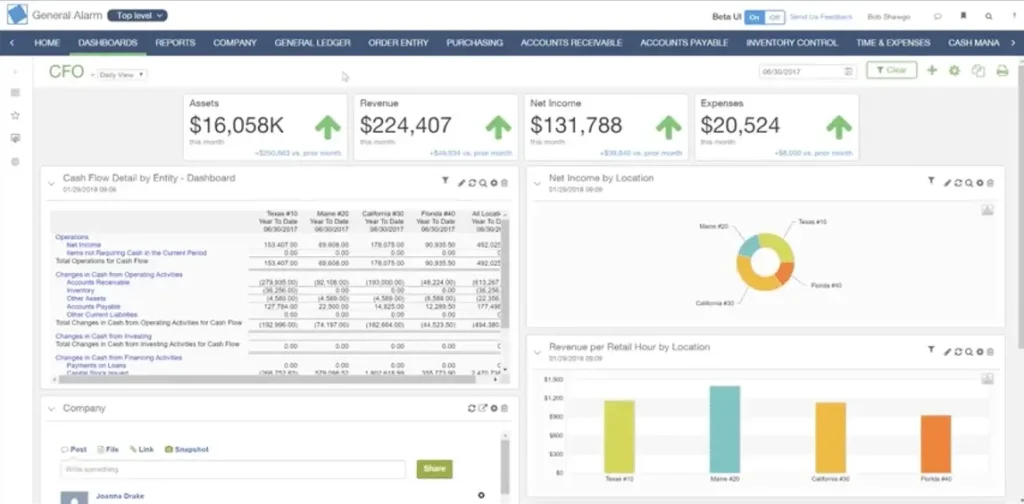
Sage Intacct is only as useful as the setup behind it.
For tribal casino finance teams, that setup matters because no one wants to rebuild the daily record after an exam request comes in. The system should already tell the story clearly.
If Sage Intacct is set up too generically, the team may still have the information, but it may be scattered. Cage reports may be in one place. CTRC support may be somewhere else. MTL support may follow a different filing process. Exception notes may sit in email. Journal entry backup may be attached to one record, while the daily reconciliation packet lives in a separate folder.
That creates extra work when the team needs quick, clear answers.
A better setup builds the record during the daily close. When casino activity goes into Sage Intacct, it should already include the details finance will need later: the entity, property, department, revenue center, gaming day, cash source, and report packet ID.
If support is attached or referenced, it should point back to the same daily record. If there was an exception, the review should be easy to see. If something changed later, the audit trail should show what changed, who changed it, and why.
Think of it this way:
The chart of accounts tells you what kind of financial activity happened.
Dimensions tell you where it happened, who it belongs to, which gaming day it supports, and where the backup lives.
For tribal casino Title 31 support, the most helpful dimensions usually include:
| Sage Intacct dimension | What it helps explain |
|---|---|
| Entity | Which legal area owns the activity: casino enterprise, tribal government, housing, or another related entity |
| Property or location | Where the activity happened |
| Department | Which team handled the activity, such as cage, vault, slots, table games, finance, compliance, housing, or administration |
| Revenue center | Which operating area produced the activity, such as slots, tables, hotel, restaurant, retail, or entertainment |
| Gaming day | Which casino operating day the activity belongs to |
| Cash source | Where the cash activity came from, such as cage, vault, bank deposit, slot kiosk, table games, or ATM settlement |
| Risk category | Whether the activity needs extra review, such as a manual adjustment, exception, high-value cash support, or late correction |
| Report packet ID | Which daily reconciliation packet connects the activity, support, review notes, and attachments |
The report packet ID is especially useful. Think of it as the label that ties the day together.
One gaming day may include cage reports, vault summaries, slot activity, table games activity, bank deposit support, cash over/short notes, CTRC support, MTL support, exceptions, journal entry backup, and reviewer sign-off. Those items may come from several systems, but finance still needs one way to connect them.
That is also where Title 31 cash-transaction records should map into the Sage Intacct setup.
| Title 31 record | What finance needs to track | Sage Intacct dimensions that help |
|---|---|---|
| CTRC support | Cash transaction support by gaming day, source, and entity | Entity, property, gaming day, cash source, department, report packet ID |
| MTL support | Multiple transaction activity tied to the same gaming day or cash area | Entity, property, gaming day, cage/window or cash source, report packet ID |
| Suspicious activity financial support | Accounting entries, exception notes, review status, and backup tied to unusual activity | Entity, department, gaming day, risk category, exception type, reviewer, report packet ID |
| Daily reconciliation | Casino cash activity tied to source reports and accounting entries | Entity, property, gaming day, cash source, revenue center, report packet ID |
| Later corrections | Post-close changes tied to reason, approver, and backup | Entity, gaming day, risk category, preparer, approver, report packet ID |
A strong daily close should leave behind a record the finance team can explain later. In practice, that means casino activity is posted or imported, tagged by entity and gaming day, tied to the right cash source, matched to cage or gaming reports, connected to CTRC and MTL support, reviewed for exceptions, attached to the daily packet, and closed with a clear review trail.
The best setup is not the most complicated one. It is the setup that makes the daily record easy to find, easy to understand, and easy to defend.
How BCS ProSoft Helps

BCS ProSoft helps tribal organizations configure Sage Intacct around the structure they actually operate in.
For tribal casinos, that means the finance system has to support the tri-stack: tribal government, casino enterprise, and housing or program entities. Each area needs its own reporting, approvals, documentation, and audit trail. The casino side also needs daily cash detail that can support Title 31 records.
BCS ProSoft helps finance teams build Sage Intacct so those needs work together instead of competing with each other.
That usually starts with the core structure:
- Entity setup
- Dimension design
- Chart of accounts review
- Daily and month-end close workflows
- Approval paths
- Attachment standards
- Reporting needs
- User roles and access controls
For Title 31 casino support, BCS ProSoft helps finance teams answer practical setup questions:
- Should gaming day be a dimension?
- How should cash source be captured?
- How should CTRC and MTL support be referenced?
- Where should daily reconciliation packets live?
- What should require review before close?
- Which reports should finance be able to pull quickly?
- How should casino activity stay separate from tribal government and housing records?
The point is to make the finance record clean, traceable, and ready when leadership, auditors, or examiners need answers.
BCS ProSoft also helps tribal organizations with broader Sage Intacct setup, reporting, and finance workflows through its tribal software services.
For tribal gaming finance teams, the right Sage Intacct implementation keeps the tri-stack organized, supports Title 31 reconciliation, and gives finance leaders a better way to explain what happened on any given gaming day.
Closing Thoughts on Title 31 Casino Compliance

For tribal casino finance teams, Title 31 readiness starts in the daily close.
That is why the Sage Intacct setup matters. The system should do more than post activity to the books. It should help the team keep casino, government, and housing records separate while making each gaming day easy to explain.
The goal is a record that makes sense later. Casino activity should tie to the right entity. Cash sources should be clear. CTRC and MTL support should connect back to the daily packet. Exceptions should show who reviewed them. Attachments should be easy to find. If something changed later, the audit trail should show what happened.
When the setup works, finance does not have to chase down files, emails, and old spreadsheets to answer basic questions. The record is already there.
BCS ProSoft helps tribal organizations configure Sage Intacct around the way their finance teams actually work, including multi-entity reporting, dimension design, daily close workflows, and audit-ready documentation.
For tribal casinos, that means keeping the tri-stack organized, supporting Title 31 daily reconciliation, and giving finance leaders a clear way to explain any gaming day when it matters.
Key Takeaways
- Tribal casinos often manage three financial areas at once: tribal government, casino enterprise, and housing or program entities.
- Title 31 daily reconciliation needs to fit into that tri-stack, not live in scattered spreadsheets or folders.
- Sage Intacct helps organize the finance-side record, but only when it is set up around the right entities, dimensions, approvals, and daily close process.
- Key dimensions include entity, property, department, gaming day, cash source, risk category, and report packet ID.
- CTRC support, MTL support, suspicious activity records, and corrections should connect back to the daily packet.
- BCS ProSoft helps tribal organizations configure Sage Intacct so finance teams can explain each gaming day clearly during audits or exams.
Frequently Asked Questions
What is Title 31 casino?
Title 31 casino refers to the federal compliance rules that apply to covered casino operations, including casinos and card clubs, under 31 cfr chapter x. In practice, title 31 compliance tells a casino how to track cash movement, keep support, and report activity that may point to money laundering, terrorist financing, or other illegal financial activities. The rules come from the bank secrecy act, and they are administered by the financial crimes enforcement network, a bureau of the us treasury department.
What does Title 31 mean?
In the casino and gaming industry, Title 31 means the casino has to follow anti money laundering aml rules that are designed to combat money laundering and prevent money laundering activities. These rules include customer identification, transaction tracking, recordkeeping requirements, internal controls, staff training, independent testing, and procedures to report suspicious transactions. They also require casinos to watch for common money laundering techniques, such as structuring transactions, unusual third party transactions, or activity that may involve organized crime.
Who does Title 31 apply to?
Title 31 applies to covered gaming operations that meet the casino rules under FinCEN regulations. Casinos can be considered financial institutions for these purposes, which means they may have duties similar to other covered financial institutions under the bank secrecy act bsa. IRS guidance notes that casino rules are tied to gross annual gaming revenue, and covered operations in the gaming industry must follow the reporting and compliance framework for casino activity.
For tribal casinos, that can include tracking cage activity, slot machines, video lottery terminals, front money accounts, money accounts, money plays, certain money plays, cash in, and cash out activity when those items meet reporting rules. Title 31 also matters because casino cash activity can look like legitimate gambling winnings even when the pattern deserves review.
How long must casinos keep Title 31 records?
Casinos generally need to keep Title 31 records long enough to support filings, reviews, and exams. IRS casino guidance says copies of filed CTRs must be retained for five years, and FinCEN’s casino rules also require specific records related to deposits, credit, customer accounts, and gaming activity monitoring.
These records help regulatory authorities review whether the casino followed the rules. Poor records can create exposure to civil penalties, criminal penalties, criminal fines, and, in serious cases, federal prison exposure for willful violations. Casinos should treat retention as part of broader regulatory oversight, not as a filing task that ends once a form is submitted.
What are the requirements for a Title 31 CTR?
A Title 31 CTR is required when a casino has reportable currency transactions involving more than $10,000 in a gaming day. Under 31 CFR 1021.311, this includes cash out activities and cash-in activity such as chip purchases, front money deposits, safekeeping deposits, currency bets, currency exchanges, and bills inserted into electronic gaming devices. Cash-out examples include chip redemptions, front money withdrawals, safekeeping withdrawals, bet payments, check cashing, currency exchanges, travel or gaming incentives, tournament payments, and other promotion payments.
The casino must aggregate multiple transactions when it has knowledge they are by or on behalf of the same person and total more than $10,000 in cash-in or cash-out during the gaming day. The report may require identifying information such as name, address, and social security number, and IRS guidance says casinos must use the bsa e filing system for filing currency transaction reports.
What are suspicious activity requirements under Title 31?
Casinos must file suspicious activity reports when the rules require them to do so. In general, suspicious transactions may involve funds tied to unlawful activity, attempts to hide or disguise funds, activity with no clear lawful purpose, or transactions designed to avoid reporting rules. FinCEN’s casino SAR rule requires reporting of suspicious activity that is relevant to a possible violation of law or regulation, and casinos may also voluntarily report activity they believe is relevant.
In plain English, suspicious activity reports help the treasury department and law enforcement investigate suspicious activities, financial crimes, and other financial crimes. Casinos should have anti money laundering controls and money laundering aml programs that help staff identify money laundering activities, spot patterns used by money launderers, and support suspicious activity reports sars with clear documentation.